A one-flower wedding is not a simpler wedding. It is a more deliberate one, because you trade a variety of species for a variety of scale, shape, and placement. Below you will find a quick sizing test, a stem-count chart, a season guide, and three questions for your florist.
What Are Monofloral Wedding Ideas?
Monofloral wedding ideas build the whole floral design from one flower variety, such as peonies, dahlias, or calla lilies. That one bloom shows up in the bouquet, the ceremony, the aisle, and the reception tables. The repetition gives a bold, cohesive look that reads well in large spaces like barns, and it simplifies color planning and sourcing.
Why Does One Flower Beat a Mixed Bouquet in a Barn?
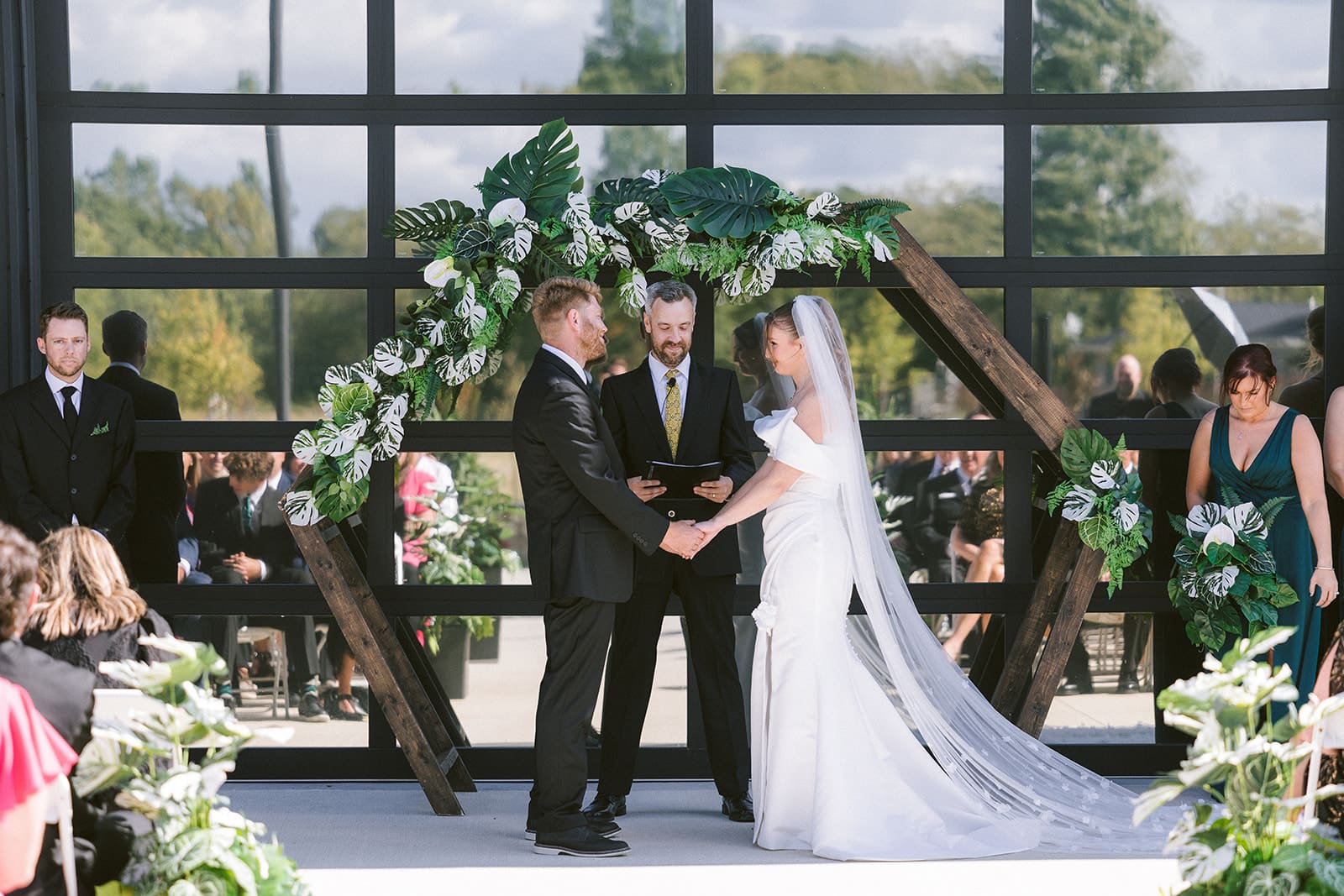
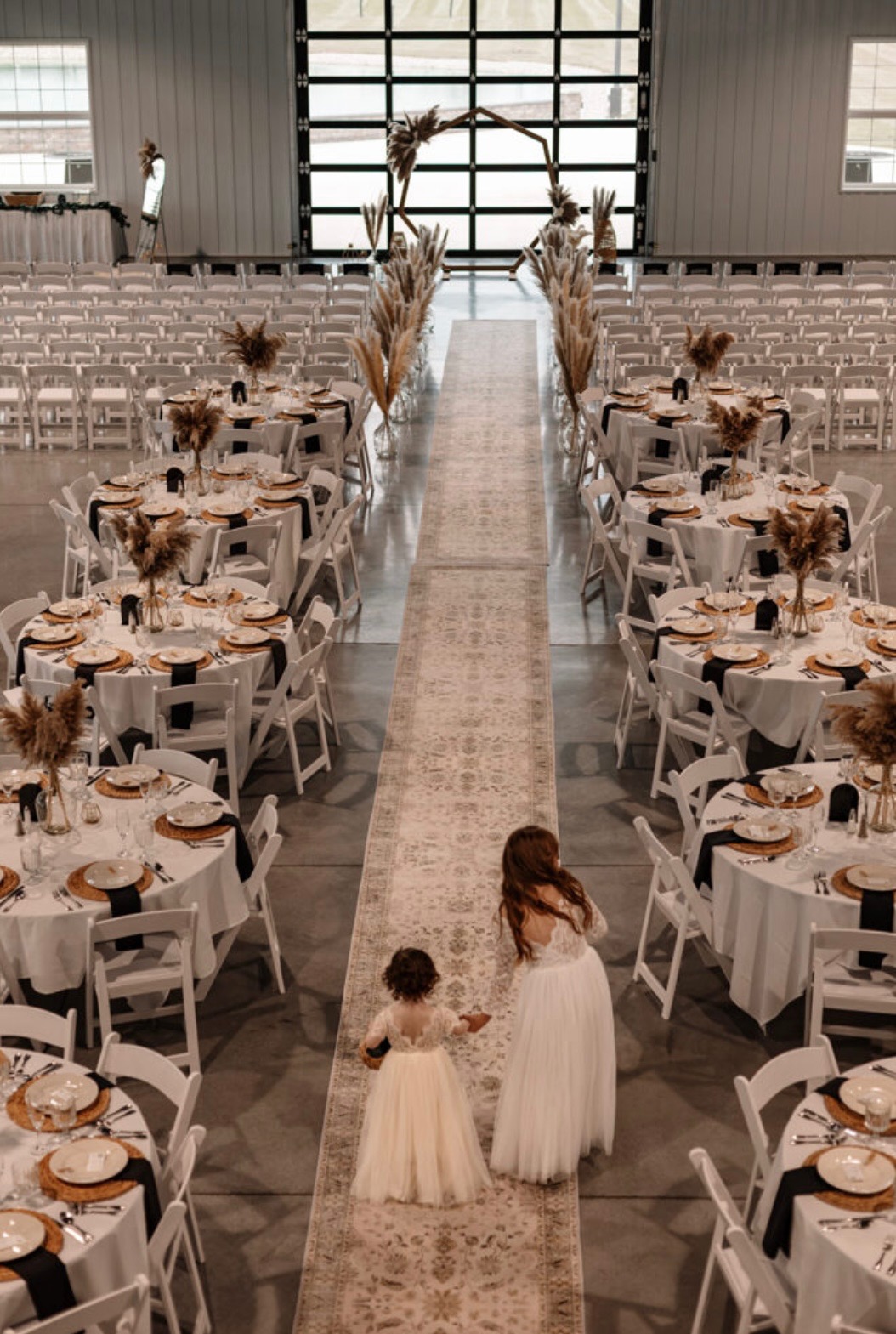
Barns reward big, repeated gestures. The room is open, the sightlines are long, and a neutral backdrop means nothing competes with your flowers. The quiet and modern indoor setting at The Grange Hall works like a gallery wall, so a single bloom becomes the artwork.
Try the Back-Row Test. Stand at the far end of the room (or look at a photo taken from there) and squint. If you cannot tell the flower’s color and shape, go bigger or group more stems together. If you can, you have the right scale.
A simple framework we like is Scale, Repeat, Echo:
- Scale: create one oversized moment, such as an arch, a hanging installation, or a long table runner.
- Repeat: show the same flower in two more places, like the aisle and the head table.
- Echo: add a small nod, such as a boutonniere or a single stem at each place setting.
What Makes a Barn Different for Flowers?
Most one-flower advice is written for ballrooms and gardens. A barn plays by its own rules:
- Height: high ceilings and open rafters can swallow small arrangements. Hanging stems, tall pieces, or a wide arch fill the vertical space.
- Light: warm string lights nudge pale blooms toward cream. Ask your florist to check a sample stem under the same lighting.
- Temperature: a full room of guests warms up fast. Delicate petals fade sooner, so keep buckets cool until the last moment.
- Backdrop: plain walls let a single bloom stand out. That is why bold, simple shapes tend to photograph so well in a modern barn.
How Do You Design a Single Flower Wedding Bouquet?
Start with a bloom that has built-in drama, like garden roses, peonies, ranunculus, tulips, dahlias, or calla lilies. Sleek, modern dresses pair well with structured flowers, while softer, rounder blooms suit romantic gowns.
With only one variety, the quality of every stem matters, so pick a flower that a trusted local florist can source in strong condition for your date. Then build interest through shape instead of species: fully open blooms are the focal points, half-open blooms add texture, and buds fill the gaps. A tight dome looks polished, while loose, staggered stems look fresh from the garden.
For single-flower bridesmaids’ bouquets, keep the same flower and shrink the scale, or go one shade deeper than the bridal bouquet. Still deciding which bloom suits your gown and wedding date? Get in touch with our team and we will help you plan it.
What Should You Ask Your Florist?
- Which varieties look their best for my date, and which are hard to get that week?
- How many stems will it take to fill my aisle and tables at the scale I want?
- Which blooms hold up best in the room’s temperature during a long day?
Which Single Flower Fits a Barn Best?
| Flower | The look | Best barn use | Real risk to plan for |
| Garden rose | Romantic, layered | Bouquets and table runners | Tight buds may not fully open, so ask for a test bloom |
| Peony | Soft, lush, full | Bridal bouquet and head table | Short season and bruise-prone petals |
| Dahlia | Bold, sculptural | Statement centerpieces | Petals tire faster in a warm room |
| Calla lily | Sleek, modern | Aisle clusters | Marks easily when handled |
| Tulip | Clean, graceful | Rows of bud vases | Stems keep growing and bend toward light |
| Chrysanthemum | Textured, long-lasting | Fall arches | Choose spider or large pom forms |
How Many Stems Do You Need for a One-Flower Barn Design?
These are rough ranges for medium-size blooms such as roses or tulips. Large blooms like peonies and dahlias need fewer stems.
| Piece | Typical stem range |
| Bridal bouquet | 18 to 30 |
| Bridesmaid bouquet | 10 to 18 |
| Boutonniere | 1 to 3 |
| Low centerpiece | 10 to 15 |
| Tall centerpiece | 20 to 30 |
| Aisle cluster | 3 to 5 per marker |
| Ceremony arch | 100 to 200 |
Ask for roughly 10 to 15 percent extra to cover damaged stems. Our guide to setting up a barn reception pairs well with this step, since the layout decides how large your florals can go.
What Are Some One-Flower Ideas You Can Copy?
- Rose arch: cover the arch with garden roses, then move them to the couple’s table after the ceremony.
- Tulip table: set single tulips in slim vases down a long table for a clean, modern line.
- Calla lily aisle: place a tall vase at the start of the aisle and another every few rows.
- Peony bouquet: carry a full peony bouquet, then put one peony at each guest’s seat.
- Hanging mums: hang round chrysanthemum balls above the dance floor for a fall wedding.
Pick two or three ideas, not all five. A one-flower plan works best when you keep it simple.
Single Flower Wedding Centerpieces for a Large Room
In a big barn, centerpieces have to work from a distance and still feel good up close. Two formats do this best with one variety:
- Bud vase ribbon: a line of low bud vases running down a long table, all holding the same flower. It keeps sightlines open and repeats the bloom enough times to read clearly from the back row.
- Tall statement pieces: a few tall arrangements spaced between lower tables. They add height without blocking faces, so guests can still talk across the table.
Wedding Ceremony Floral Arrangements and Aisle Ideas
Start with one focal piece: an arch, a pair of tall standing arrangements, or a cloud of stems hanging overhead. This is your “Scale” moment, and it frames every photo of the ceremony.
For the flower arrangement for the wedding aisle, you do not need to dress every row. Repeat the same variety in clusters at chair ends, or in a loose rhythm along the floor. It saves stems and looks more intentional.
After the ceremony, move the pieces to the cocktail area or the reception. The same flowers work twice, which also helps your budget.
Monochromatic Wedding Flowers That Still Feel Modern
One variety does not mean one flat color. A tonal sweep of the same flower, from ivory to blush to a deeper rose, adds depth and movement without adding new species.
Clear cylinders or matte ceramic vessels turn the display into a modern wedding floral arrangement instead of a traditional bouquet spread. For extra height or contrast, use greenery or branches sparingly.
A one-flower design does not look plain. It looks plain only when the scale is too small.
One-Flower vs Mixed Floral Design: What Changes?
A one-flower plan is not always easier, but it is often more efficient.
Where it helps
- Setup moves faster because every stem goes into the same kind of arrangement.
- Leftover stems can go straight into another piece.
- Photos feel unified from the first frame to the last.
Where it asks more
- Availability matters more, because the whole plan rests on one bloom.
- Weak stems are easy to spot when nothing else distracts the eye.
- Scale needs real planning, since a small flower in a big room disappears.
How Do You Choose the Right Flower for Your Wedding Date?
Start with what is actually in bloom. Tulips and daffodils come in spring, peonies in early summer, and chrysanthemums and asters in fall.
| Season | Strong single-flower picks |
| Spring | Tulips, ranunculus |
| Early summer | Peonies, garden roses |
| Late summer into fall | Dahlias, mums |
| Winter | Amaryllis, white roses |
Choose the flower first and the color second. Locking a color before checking availability is how a plan falls apart. To see what is blooming each month, check our month-by-month flower guide.
What Mistakes Should You Avoid With a One-Flower Design?
- Going too small: group delicate stems tightly or choose a larger bloom.
- Picking from a photo, not a calendar: ask about availability early.
- Forgetting the supporting cast: plan vessels, greenery, and candles together.
- Using one flat shade: mix tones of the same flower for depth.
- Putting it all in one spot: spread the repeats so the eye keeps finding the bloom.
Frequently Asked Questions
Q1. What is the 3-5-8 rule for wedding flowers?
It is a floristry guideline of roughly three focal flowers, five greenery stems, and eight fillers. Treat it as a starting rhythm, not a strict law.
Q2. What is the cheapest way to do wedding florals?
Use one in-season variety your florist buys in volume, choose fewer but larger focal pieces, and reuse ceremony arrangements at the reception.
Q3. Are single-flower weddings still in style?
Yes. Couples keep choosing fewer varieties with bigger statements, like one-variety bouquets and tonal color stories.
Q4. What is the most beautiful flower for a wedding?
The one that fits your season and room. For a barn, we lean toward garden roses or peonies for softness, dahlias for drama, and calla lilies for a sleek line.
Q5. Are mixed florals out of style?
No. What is fading is the overstuffed, many-species look. Mixed flowers still work with restraint and repetition.
Ready to See One Big Floral Moment in the Room?
A one-flower design works best when you can picture it in space. Tour the space first, stand where your arch, aisle, and head table will go, and run the Back-Row Test yourself.
Since a single bloom carries the whole look, it also helps to choose a flower that is in season with Ohio’s cut flower growers for your wedding month. Share your guest count and the flower you love, and we will help you size the florals to the room. Then check your date’s availability with our team today.