
Let’s be honest: picking where you get married might be the single most consequential decision in your entire wedding planning journey. And yet, so many couples reach a frustrating crossroads early on: do we book a private wedding venue, or would a public event space actually work just as well?
On the surface, the distinction might seem obvious. But dig a little deeper and you’ll find the gap between the two is far more nuanced than a simple “exclusive vs. shared” equation. There are questions of cost, control, vendor policies, atmosphere, exclusivity, and something harder to quantify: the feeling the space gives you and your guests.
Having helped couples think through venue decisions across dozens of weddings, here’s what I can tell you: the right choice depends entirely on what matters most to you. And to figure that out, you need the full picture.
What Exactly Is a Private Wedding Venue?
A private wedding venue is a facility or property that’s booked exclusively for your event. When you secure it, it’s yours for the duration of your contract. No other events run simultaneously, no strangers wandering through, no competing noise from the ballroom next door.
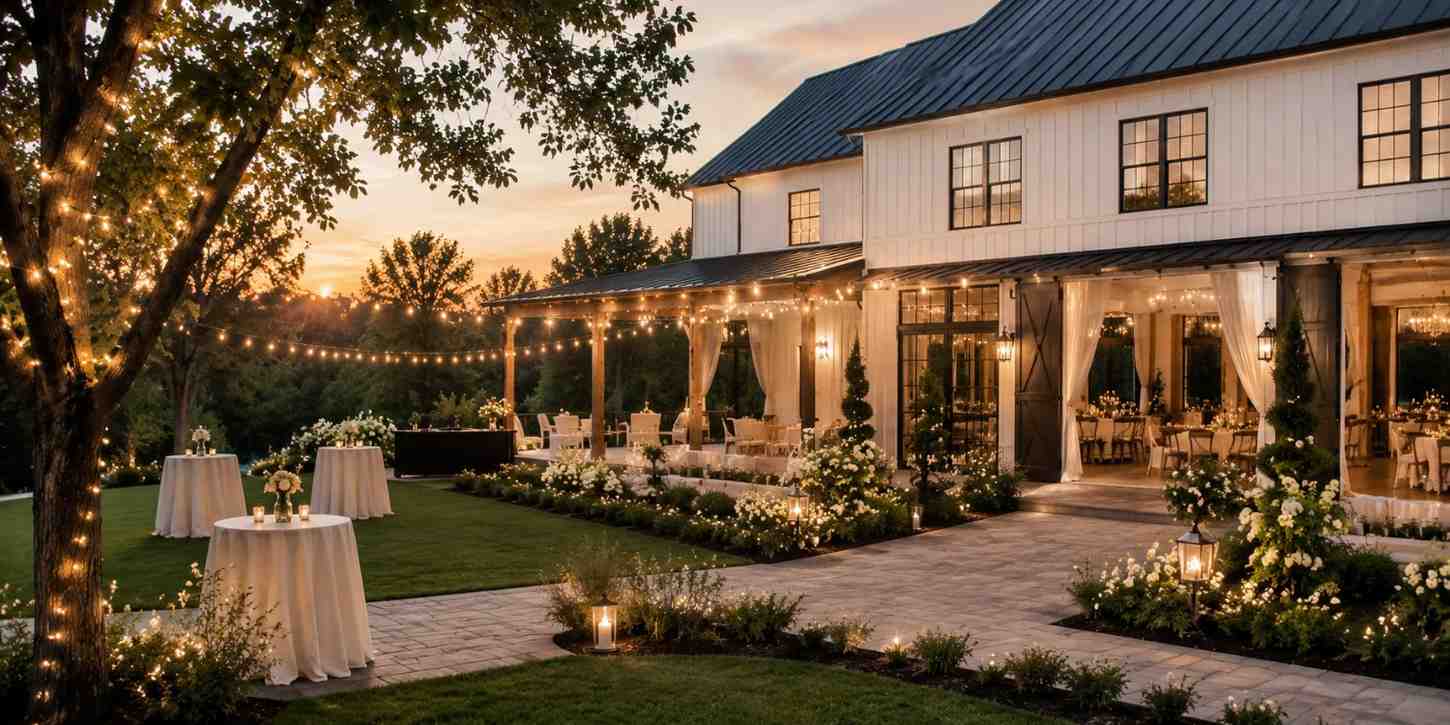
Private venues span a wide range: think dedicated estate homes, barns and farm properties, boutique garden venues, converted warehouses, heritage manors, or purpose-built celebration halls. What they share is that the entire space, from the ceremony area to the bridal suite to the parking lot, belongs to your wedding and nothing else during your booking window.
This exclusivity isn’t just about ego. It translates into practical advantages that affect everything from the guest experience to how much creative control you have over the day.
What Counts as a Public Event Space?
A public event space is typically a multi-purpose facility that hosts various events throughout the week, corporate conferences on Tuesday, birthday parties on Friday, and weddings on Saturday. Examples include hotel ballrooms, community halls, civic centers, rooftop terraces shared within a building, restaurant event rooms, and certain park pavilions.
Crucially, while you’re booking a block of time in these spaces, you’re not booking the property itself. Other guests, staff, or events may share the building. The space is designed to be neutral and adaptable, which can be both a strength and a weakness depending on what you’re after.
The Core Differences That Actually Matter
Exclusivity and Guest Experience
This is where the private wedding venue vs public event space debate gets real. At a private venue, your guests aren’t bumping into strangers in the restroom or hearing someone else’s DJ through a shared wall. The experience is contained and intentional.
At a public event space, you’re often sharing amenities, parking, entrances, bathrooms, sometimes even staff. For a smaller, intimate wedding this might not matter. For a 150-person celebration where atmosphere is everything, it can feel disjointed.
Vendor Flexibility
Private venues vary widely. Many are vendor-open, meaning you can bring in your own caterers, florists, bartenders, and entertainment without restriction. Others maintain a preferred vendor list but allow outside vendors with approval. This flexibility lets you curate a wedding team you genuinely trust.
Public event spaces, especially hotel ballrooms, often require you to use their in-house catering and bar services. That sounds convenient until you realize you’re paying premium prices for standard banquet food with limited customization options.
“Couples who choose private venues consistently report feeling more in control of their wedding day and that sense of ownership matters more than people realize until they’re actually planning.”
Ambiance and Personalization
Public event spaces are designed to be a blank canvas. That’s intentional. The trade-off is that you’re starting from zero when it comes to atmosphere. You may need to invest significantly in decor, draping, lighting, and floral arrangements just to give the room a sense of identity.
Private venues often come with a built-in character: exposed brick, manicured gardens, vaulted ceilings, or a lakefront setting. That inherent aesthetic reduces the decorating budget you’d need to spend elsewhere and creates a sense of place your guests remember long after the night ends.
Pricing Structure and Hidden Costs
This is where assumptions get couples into trouble. Many people assume a private wedding venue will automatically cost more. That’s not always true.
A hotel ballroom might look affordable at a flat rental rate, but once you factor in mandatory catering minimums, corkage fees, setup charges, valet requirements, and overtime rates, the total cost can exceed what a private venue charges. Private venue pricing is often more transparent: a site fee, perhaps a catering minimum, and clearly defined add-ons.
| Factor | Private Wedding Venue | Public Event Space |
|---|---|---|
| Exclusivity | Full property buyout | Time-slot booking only |
| Vendor Choice | Usually open or flexible | Often restricted/in-house |
| Ambiance | Built-in character | Neutral/blank canvas |
| Pricing Transparency | Generally clearer | Hidden fees common |
| Guest Experience | Seamless and contained | May share space/amenities |
| Setup/Breakdown Time | Often more generous | Typically tight windows |
| Noise/Disturbance Risk | Very low | Moderate to high |
Time Flexibility and Logistics
Private venues typically offer longer booking windows. Many include the day before for setup and the morning after for teardown. That extra time reduces stress enormously, your vendors aren’t rushing in two hours before guests arrive.
Public event spaces tend to have back-to-back bookings. You might have a strict four-hour window. Every extra hour costs more. And if the previous event runs long, yours suffers the consequences.
When a Public Event Space Might Be the Smarter Call
To be fair: public event spaces aren’t the wrong choice across the board. There are specific scenarios where they make excellent sense.
- Smaller guest lists under 50 people, where intimacy is prioritized over grandeur
- Urban weddings where a rooftop or restaurant space aligns with your aesthetic and simplifies logistics
- Elopement receptions or low-key celebrations where atmosphere is less critical
- Tight timelines where you need a venue that handles most logistics in-house
Key Insight: The smartest couples don’t choose based on category, they choose based on what their specific wedding actually needs. A beautifully managed public event space can outperform a poorly maintained private venue any day.
Questions to Ask Before You Book Either
Whether you’re leaning private or public, ask every venue these questions before signing anything:
- Are we the only event on this date, or will others share the property?
- What vendors are we required to use vs. free to bring in ourselves?
- What’s included in the rental fee, and what triggers an additional charge?
- How many hours do we have for setup, the event itself, and breakdown?
- What’s the noise curfew, and is there any sound amplification restriction?
- What contingency plans exist for unexpected situations like weather or power outages?
The Intangible Factor: How the Space Feels
Here’s something no spreadsheet captures well. When couples walk into the right venue, there’s an almost immediate sense of “yes, this is it.” That feeling tends to be easier to access at a private wedding venue, where the space is designed with weddings specifically in mind.
Public event spaces are good at many things, but they’re rarely optimized for the emotional weight of a wedding day. The lighting may be fluorescent by default. The layout might feel more like a conference center than a sanctuary. These are solvable problems, but they require time, money, and imagination.
Private venues, at their best, do some of that emotional lifting for you from the moment guests pull into the driveway.
Final Thoughts
When couples genuinely weigh the private wedding venue vs public event space question, the answer usually comes down to three priorities: how much control you want, how much atmosphere you need, and how important seamless exclusivity is to your guest experience.
Private venues tend to win on flexibility, ambiance, and the overall coherence of the day. Public spaces can win on convenience and certain cost scenarios but only when the specific space genuinely suits your vision.
Don’t let the category make the decision for you. Visit both types, ask the hard questions, and trust what the space tells you when you’re standing inside it. Your wedding deserves a backdrop that feels as intentional as everything else you’re planning.
Frequently Asked Questions
A private wedding venue is exclusively reserved for your event, meaning no other guests, events, or activities share the property during your booking. A public event space, such as a hotel ballroom or community hall, rents time slots and may host multiple events in the same building or facility simultaneously. The key differences lie in exclusivity, vendor flexibility, ambiance, and overall guest experience.
Not necessarily. While private venues often have higher upfront site fees, public event spaces frequently come with mandatory in-house catering minimums, corkage fees, overtime charges, and service add-ons that drive the total cost higher than expected. Always compare all-in pricing rather than just the base rental rate before drawing conclusions about which is more affordable.
Many private wedding venues are vendor-open or vendor-flexible, allowing you to select your own catering team, florists, bar service, and entertainment. Some maintain a preferred vendor list but allow outside vendors with prior approval. Always clarify vendor policies before signing a contract, as restrictions can significantly impact your budget and creative freedom.
The main advantages include full property exclusivity, greater creative control, more generous setup and breakdown time, a cohesive guest experience without outside interruptions, and often a stronger built-in aesthetic that reduces decorating costs. Private venues are also typically better optimized for weddings specifically, which means the layout, lighting, and facilities are designed with your type of event in mind.
Public event spaces can work very well for smaller, more casual weddings or for couples who prioritize convenience and in-house services. However, they come with trade-offs: shared amenities, tighter time windows, and less flexibility around vendors and decor. They work best when the space’s aesthetic naturally aligns with the couple’s vision and when the guest list is on the smaller side.